
Why OKRs And KPIs Need A Better Approach
Goals play a powerful role in shaping direction and focus within any organisation. OKRs and KPIs were introduced to help teams stay aligned, measure progress, and move forward with clarity. When used thoughtfully, they become strong tools for growth and collaboration.
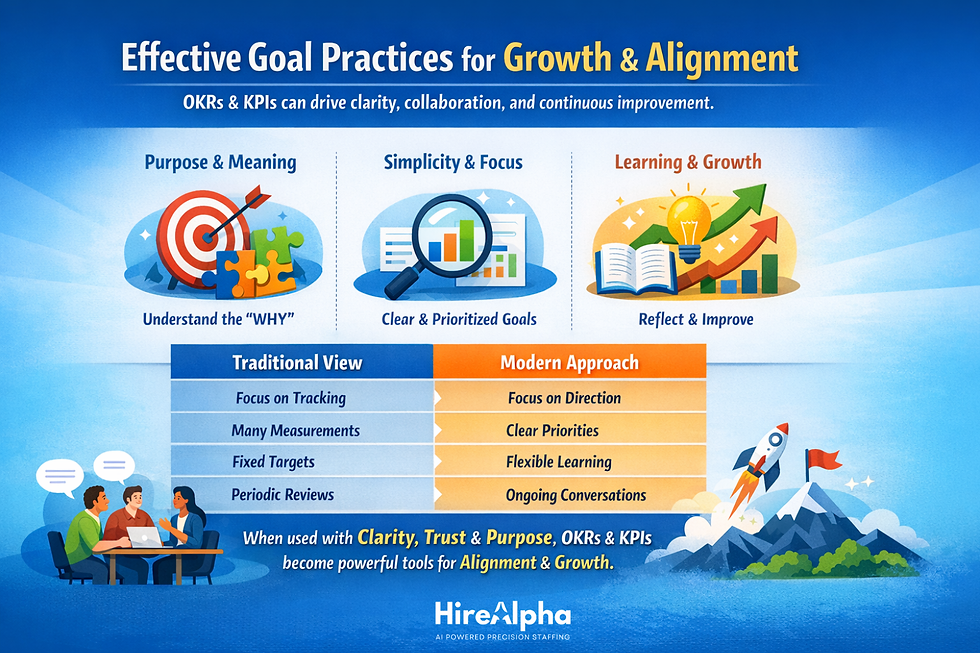
The real value of OKRs and KPIs comes from how they are designed and communicated. Goals work best when everyone understands the purpose behind them. When teams know why a goal exists and how it connects to the bigger picture, effort feels meaningful and motivation rises naturally.
Another important factor is simplicity. Clear, well-chosen goals help teams focus their energy on what truly matters. A smaller set of meaningful metrics allows people to work with confidence and direction, instead of dividing attention across too many signals.
OKRs and KPIs also create the most value when they encourage learning and improvement. Rather than being treated as strict evaluations, they can guide reflection, experimentation, and continuous progress. This approach helps teams think bigger, collaborate better, and improve steadily over time.
Strong goal-setting is often a shared process. When leaders provide direction and teams contribute their perspective, ownership becomes stronger, and alignment feels natural. Regular conversations around goals keep them relevant and adaptable as priorities evolve.
Here’s a simple way to look at effective goal practices:
Traditional View | Modern Approach |
Focus on tracking | Focus on direction |
Many measurements | Clear priorities |
Fixed targets | Flexible learning |
Periodic reviews | Ongoing conversations |
When OKRs and KPIs are approached with clarity, trust, and purpose, they become more than metrics. They turn into practical tools that help teams stay aligned, grow consistently, and move forward together with confidence.


